
Self Steer vs Passive Steer Axles
Self steer and passive steer axles are used on trailers and commercial vehicles to improve manoeuvrability, reduce tyre scrub and improve turning performance. While both systems allow the axle wheels to steer during a turn, they operate differently and have different advantages when travelling forwards and reversing. This guide explains the differences between self steer and passive steer axles and where each system is typically used.
Self Steer Axle
Benefits
- Better turning circle than fixed axles in forwards travel
- Reduced tyre wear than fixed axles
- Simple to maintain
Limitations
- Can Not be reversed
- Needs to be driven forwards to lock/lift for reverse travel
- 13-15 degree steer angle only
Passive steer system
Benefits
- Better turning circle than fixed axles in forwards travel (Same as self Tracking)
- Reduced tyre wear than fixed axles (same as self tracking)
- Can be reversed with some tyre scrub
Limitations
- 13-15 degree steer angle only
- More Expensive than self tracking
- More complicated control system
A passive steer system uses a self-steering/tracking axle, with steering input provided mechanically or hydraulically rather than by a powered steering system.
Self Steer Axles
Self steer axles, also known as self-tracking axles, use lateral forces generated during a turn and the axle kingpin geometry to steer the wheels naturally into the corner. This improves trailer manoeuvrability, reduces tyre scrub and improves stability through the turn.
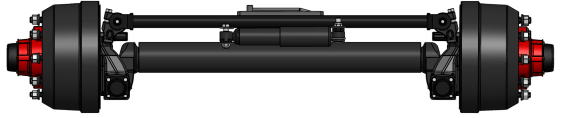
Self Steer Axle
This self steer axle requires locking and or lifting when reversing the combination otherwise the wheels would steer in the wrong direction for the manoeuvre. This can create issues if trying to reverse turn in a small space as the combination needs to be driven forwards first to centralise for locking.
Passive Steer Axle
Passive steer axles use mechanical linkage or hydraulic displacement to steer the axle in response to movement between the towing vehicle and trailer, or movement of another steering axle. Unlike a self steer axle, the steering input is transferred to the axle through the steering system rather than relying solely on self-tracking geometry.
A typical passive steer system uses a hydraulic ram between the towing vehicle and trailer. As the articulation angle changes, the ram displaces hydraulic fluid to steering rams fitted to the rear steer axle. This creates a closed hydraulic system that transfers the steering movement without requiring an external power source.
The axle itself is generally based on a self steer axle with two steering rams attached. The kingpins are positioned forward of the axle centre line, allowing the wheels to naturally self steer or track in the direction of the turn. The hydraulic rams provide the additional steering input from the passive steer system.
The maximum steer angle is typically around 13–14 degrees. Beyond this point, system pressure increases as the self-steering action attempts to steer the axle further than the hydraulic rams allow. An oil reservoir is generally incorporated into the system to compensate for leakage and pressure variations. Some systems may also use electronic control to adjust the steering angle under different operating conditions.
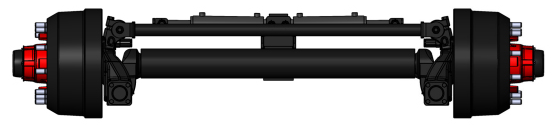
Self tracking axle with ‘passive steer’ rams.
This self steer axle requires locking and or lifting when reversing the combination otherwise the wheels would steer in the wrong direction for the manoeuvre. This can create issues if trying to reverse turn in a small space as the combination needs to be driven forwards first to centralise for locking.
Command Steer Axles
Command steer is a powered system where a controlling sensor / linkage senses the steer angle between the towing vehicle and the trailer or steering input from driver and remotely demands the correct pressure/volume in the steer rams at the rear to steer the axle to the desired amount. The axle steering pins (King pins) are directly on the axle lateral centre line. When reversing this axle is the leading axle of the combination and thus with the wheels steered correctly to the demand this aids reverse steering. Max steer angle 30-40 degrees much better for reversing. Many commercial specialist low loaders will have at least one or 2 full rear steers along with the ‘Longer Semi Trailers’
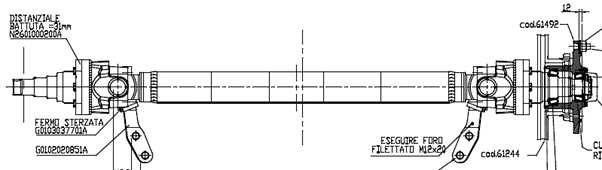
Active Steer
Would use a command steer axle with computer to control the steering angle of the axle.